
LGBTQIA+ Information and identities
These are just a small selection of LGBTQIA+ flags and identities. While some think this might be too many, it’s all part of a drive to be more inclusive of the expansive breadth of identity within the community. We are learning/understanding more about sexual identity and gender all the time.
We have used a variety of sources to bring this information together. If you see anything that needs updating, adding or changing please contact us using the link at the bottom of this page.


The LGBTQIA+ Pride Flag
This represents all the different groups of the LGBTQIA+community. The Pride flag is a beautiful umbrella symbol forwhich hopefully the whole community will feel welcome to fallunder. It has six distinct colours and is the most widely usedsymbol for LGBTQIA+ pride worldwide.
The Progress Pride Flag
Designer Daniel Quasar has reached his Kickstarter goal to produce a flag that symbolises progress with this chevron design flag. Created in 2018, the colours include the Transgender Pride (explained below) and the Philadelphia colours representing PoC and those lost to AIDS.

The Transgender Pride Flag
This flag represents transwomen (pink), transmen (blue) andthose who don’t fall into a gender binary known as non-binarypeople (white). Designed by transwoman Monica Helms in1999, it can be flown any way up to symbolise ‘trying to findcorrectness in our own lives’. Transgender people are thosewho identify as a gender different from the one they wereassigned at birth.

The orange-pink design is intended as a replacement forthe pink-and-red “lipstick” flag for the inclusivity of gender-nonconforming lesbians. From top to bottom, the selectedcolours represent Gender non-conformity (dark orange)
– Community (light orange) – Unique relationships towomanhood (white) – Serenity and peace (pink) – Feminity(dark pink).

The Gay Men's Pride Flag
A male gay (a.k.a Men Loving Men or MLM) Pride 5 stripe flag was proposed in 2019 to align with the Lesbian Pride flag
but this 7-stripe design is most commonly used. The colours represent community, healing, joy, trans men and non-binary people, love, courage, diversity and inclusivity.
The Bisexual Pride Flag
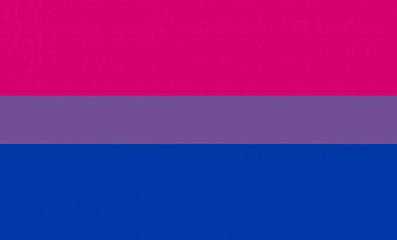
The bisexual pride flag was designed by Michael Page in 1998 togive the bisexual community its symbol comparable to the gay prideflag of the larger LGBTQIA+ community. He aimed to increase thevisibility of bisexuals, both among society as a whole and withinthe LGBTQIA+ community. The colours chosen above were usedas so: Pink is for same-sex/gender attraction, blue is for differentsex/gender attraction, and purple is to represent the attractionacross the gender spectrum and attraction to Non-binaryindividuals. Bisexual is an attraction to more than one gender.

The Pansexual Pride Flag
The pansexual pride flag has three horizontal stripes: pink,yellow, and blue. According to most definitions, pink representspeople who are female identified, the blue represents peoplewho are male identified, while the yellow represents nonbinaryattraction. The prefix “pan-” means “all.” Similarly, pansexualitymeans that you’re attracted to people of all genders. Thisincludes people who don’t identify with any gender (agender).Many pansexual people describe themselves as being attractedto people based on personality, not gender.

The Non-Binary Pride Flag
This flag was created in 2014 to represent people whosegender is outside of the binary of male or female. Yellowrecognises being outside of a binary, white for all genders,purple for fluidity between male and female, and black for theagender community. Non-Binary is neither male nor female butsomewhere in between, fluid, both, or neither.

The Asexual Pride Flag
The flag consists of four horizontal stripes: black, grey, white,and purple from top to bottom. The black stripe representsasexuality, the grey stripe representing the grey area betweensexual and asexual, the white stripe sexuality, and the purplestripe community. It’s important to remember that asexualityis an umbrella term, and exists on a spectrum. Asexual people– also known as “Ace” or “Aces” – may have little interest inhaving sex, even though most desire emotionally intimaterelationships. Within the ace community, there are many waysfor people to identify.

The Intersex Pride Flag
In 2013 Morgan Carpenter of Intersex Human Rights Australiadesigned the intersex flag. In 2017 under the leadership ofAmerican civil rights activist Amber Hikes, Philadelphia’s Officeof LGBT Affairs developed the rainbow flag to incorporateblack and brown stripes to include black, brown, and people ofcolour. Building on that in 2018 Daniel Quasar redesigned theflag to include trans people, creating the Pride Progress flag.
In 2021, Valentino Vecchietti of Intersex Equality Rights adaptedthe Pride Progress flag design to incorporate the intersex flag,creating this Intersex-Inclusive Pride flag 2021.

The Polyamory Pride Flag
This flag represents the polyamorous community- those that engage in sexual relationships with multiple partners with consent from all involved. Blue for honesty, red for love, and black for solidarity for those who are not openly poly. The Greek letter pi, the first letter in polyamory, represents the infinite emotional attachment polyamorous people hold with friends, lovers, and those in-between, rather than just sexual relationships.

The Polysexual Pride Flag
A polysexual person is someone who is sexually and/or beingbisexual or pansexual, although all of these sexualities involvebeing attracted to more than one gender. It also is not the sameas being polyamorous.

The Genderfluid Pride Flag
The Genderfluid Pride Flag
This flag created in 2013 represents those whose gender isnot fixed or constant. It has five horizontal stripes: pink forfemininity, blue for masculinity, purple for both masculinityand femininity, black for the lack of gender, and white forall genders.

The Genderqueer Pride Flag
The genderqueer flag, made in 2010, represents those who do not identify with the socially constructed norms of their biologically determined sex. This term is sometimes used interchangeably with the term Non-Binary. The flag represents androgyny with lavender, nonbinary people with green and agender identities with white.

The Aromantic Pride Flag
A person of any gender or sexual orientation who experiences little, or no, romantic attraction. Aromantic people may still experience other types of attraction, such as sexual or physical attraction. The flag was designed by the Aro community on Reddit, to help them show their identity and raise awareness about Aromanticism.The green and light green stripes cover everyone under the aromantic spectrum, while representing nonromantic forms of love and attraction, and the grey and black represent all sexualities under the aromantic spectrum.

The Demigender Pride Flag
Demigender is a gender identity that involves feeling a partial, but not a full, connection to particular gender identity or just to the concept of gender. Demigender people often identify as non-binary.

The Demi girl Pride Flag
Demigirl is a gender identity describing someone who partially identifies as a woman or girl.
The white represents the neutrality of the gender. The light pink represents the traditional colour used for femininity, which is associated with womanhood. The shades of grey indicate the partial nature of the gender.

The Demi boy Pride Flag
Demi Boy is gender identity describes someone who partially identifies as a man or boy.
The demi boy flag holds meaning within its colours. The white represents the non-binary part of the gender, light blue represents the partly boy aspect, and both greys represent the spectrum within the other part of being a demi boy.

The Agender Pride Flag
Agender is a term which can be can be seen either as a non-binary gender identity or as a statement of not having a gender identity. People who identify as agender may describe themselves as one or more of the following:
-
Genderless or lacking gender.
-
Gender-neutral. This may be meant in the sense of being neither man nor woman yet still having a gender.
-
Not knowing or not caring about gender, as an internal identity and/or as an external label.
-
Deciding not to label their gender.
.png)
The Demisexual Pride Flag
A demisexual is someone who only experiences sexual attraction to people with whom they have close emotional connections. For demisexuals, sexual attraction can only come after an emotional bond has formed. Black represents asexuality. Gray represents demisexuality. White represents sexuality. Purple represents community.

The Queer Pride Flag
Queer can mean different things to different people, but the most accepted definition is someone who is not cishet or someone with variant experiences with orientation, gender, and/or sex. On this flag, The shades of pink next to each other and shades of blue next to each other symbolise same-gender attraction. The orange and green are for non-binary individuals. Black and white are for asexual, aromantic, and agender spectrum individuals.
.png)
The Omnisexual Pride Flag
An omnisexual is a person who has romantic, sexual, or affectional desires for people of all genders and sexes. This is similar to pansexuality; however, there are differences between these two terms. Omnisexual people are not gender blind, and they see and acknowledge gender. Omnisexual people are sexually attracted to different genders and sexual orientations, but unlike pansexuality, the gender of the people they are attracted to matters to some degree. The omnisexual pride flag was created by @pastelmemer in 2015; however, they never explained the exact meaning of the colors.

The Abrosexual Pride Flag
An abrosexual person has a fluid sexual orientation and may experience different sexual orientations over time. They may be one sexuality today and be another tomorrow. The time frame to change an abrosexual individuals’ sexual orientation doesn’t matter, and it could be hours or years before they identify as different sexuality.

The Bigender Pride Flag
A bigender person is some whose sense of personal identity encompasses two genders. It literally translates as ‘two genders’ or ‘double gender,’ and these genders could be male and female but could also combine non-binary identities. Pink/blue stripes represent felt identities (feminine, masculine, androgynous). The top purple is for all kinds of good relationships. The white is for your unique bigender experience, how it feels and what it’s like. The bottom purple is about self-respect, pride, and being true to yourself.
.png)
The Pangender Pride Flag
Pangender is someone who feels comfortable with different kinds of gender labels and whose gender identity is notlimited to one gender and may encompass all genders at once. It comes with an understanding that the vast and diverse multiplicity of genders within the same individual can extend infinitely, always within the person’s own culture and life experience, and may or may not include unknown genders.

The Trigender Pride Flag
Trigender is a gender identity in which a person switches between or among several genders, including a third gender (genderless, a mix of masculine and feminine, or any other variety of genderqueer identities). Dependent on the
individual’s mood or environment, a trigender individual may change from one gender to another.

The Heterosexuel Flag
Heterosexuality is most viewed as men attracted to women and women attracted to men. The term “straight” is used to describe for both straight men and straight women. While straight is often used to describe non-LGBTQIA+ people itis possible for straight people to be part of the LGBTQIA+
community. For example, they might be transgender. They alsomight be, asexual heteroromantic, or aromantic heterosexual.
Understanding Gender
Provided by www.itspronouncedmetrosexual.com
